Practice Tools
Tic Response Desensitization
A mindfulness-based tool to reduce distress and reactivity to tics and urges.
Tics often produce a feeling of frustration, irritation, or distress. This feeling can be automatic and occur regardless of how we think about our tics. Because the feeling is generally unpleasant, the brain then considers the feeling itself to be a problem, which feeds back into the stress associated with the tic and further strengthens it. Fortunately, our brains are very trainable and we can teach them to respond differently. This tool uses simple mindfulness techniques to teach the brain to begin noticing the tics, the urges, and our responses to them as simply something that happens, but not actually a problem.
And as we always say with these kinds of practices: It’s okay to not like the feeling too — we just don’t need to make it bigger than what it is.
Set up a session
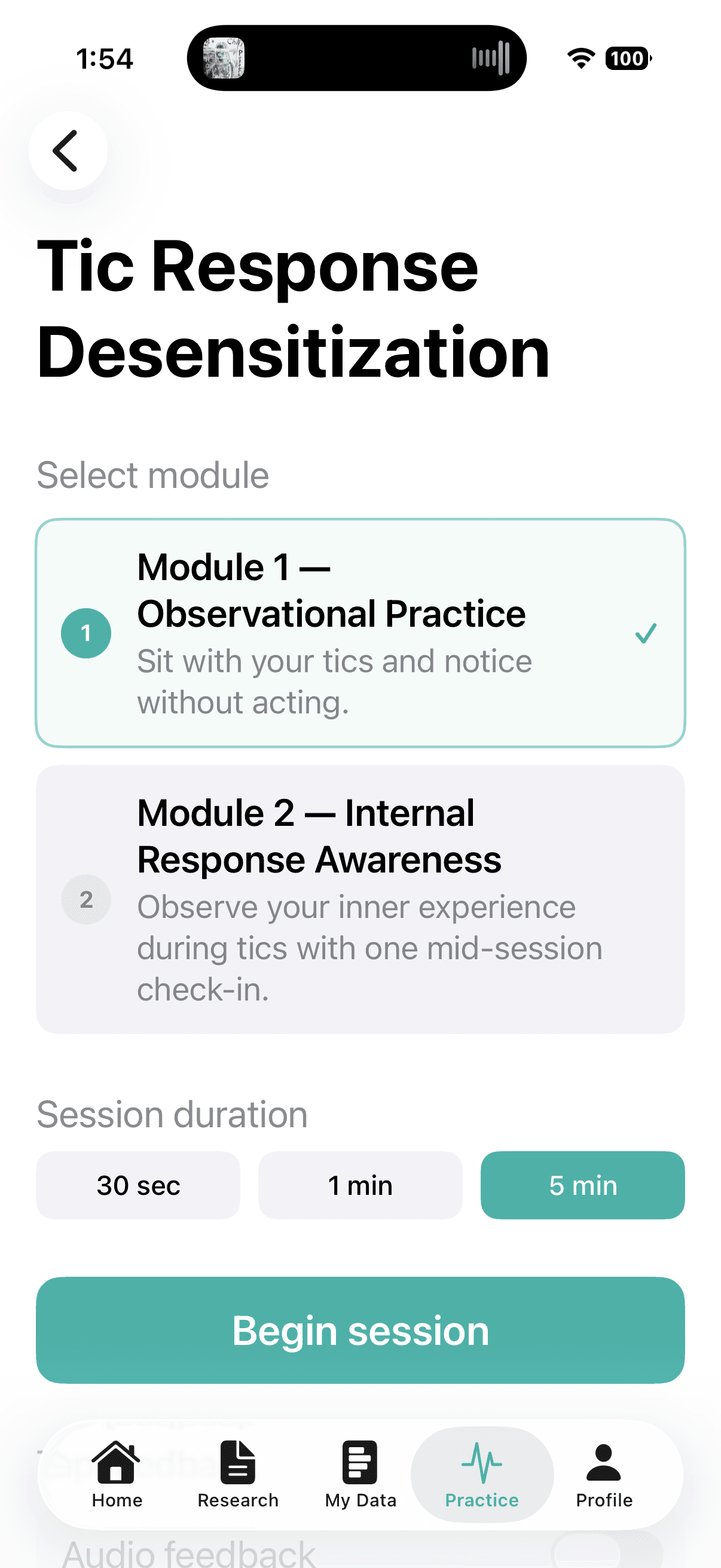
Choose your module
Start with Module 1 — Observational Practice: sit with your tics and notice without acting. Module 2 — Internal Response Awareness adds one mid-session check-in to observe your inner experience during tics. Sessions run from 30 seconds up to 5 minutes.
During the session
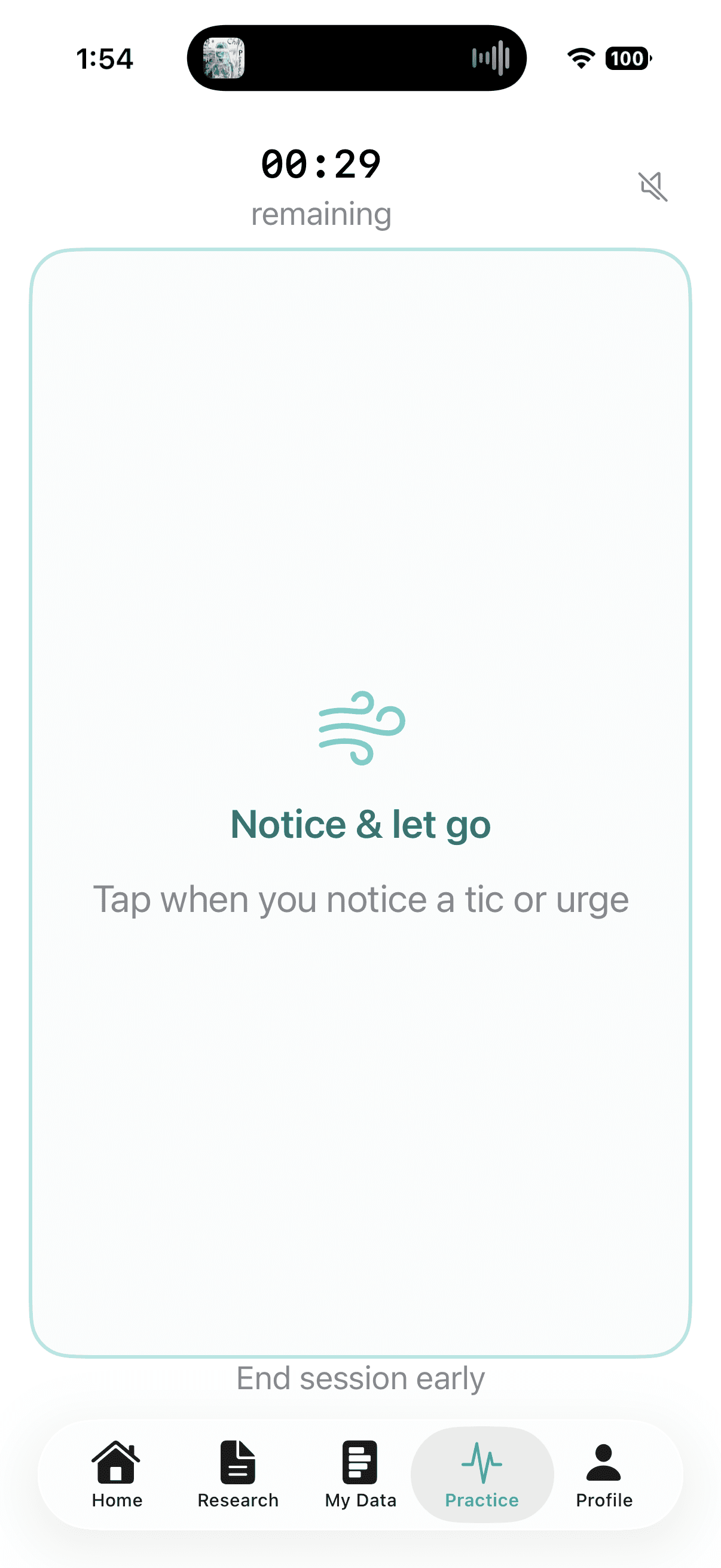
Notice & let go
Tap when you notice a tic or urge — that's the whole practice. No counting to get right, no trying to stop anything, just noticing.
After the session
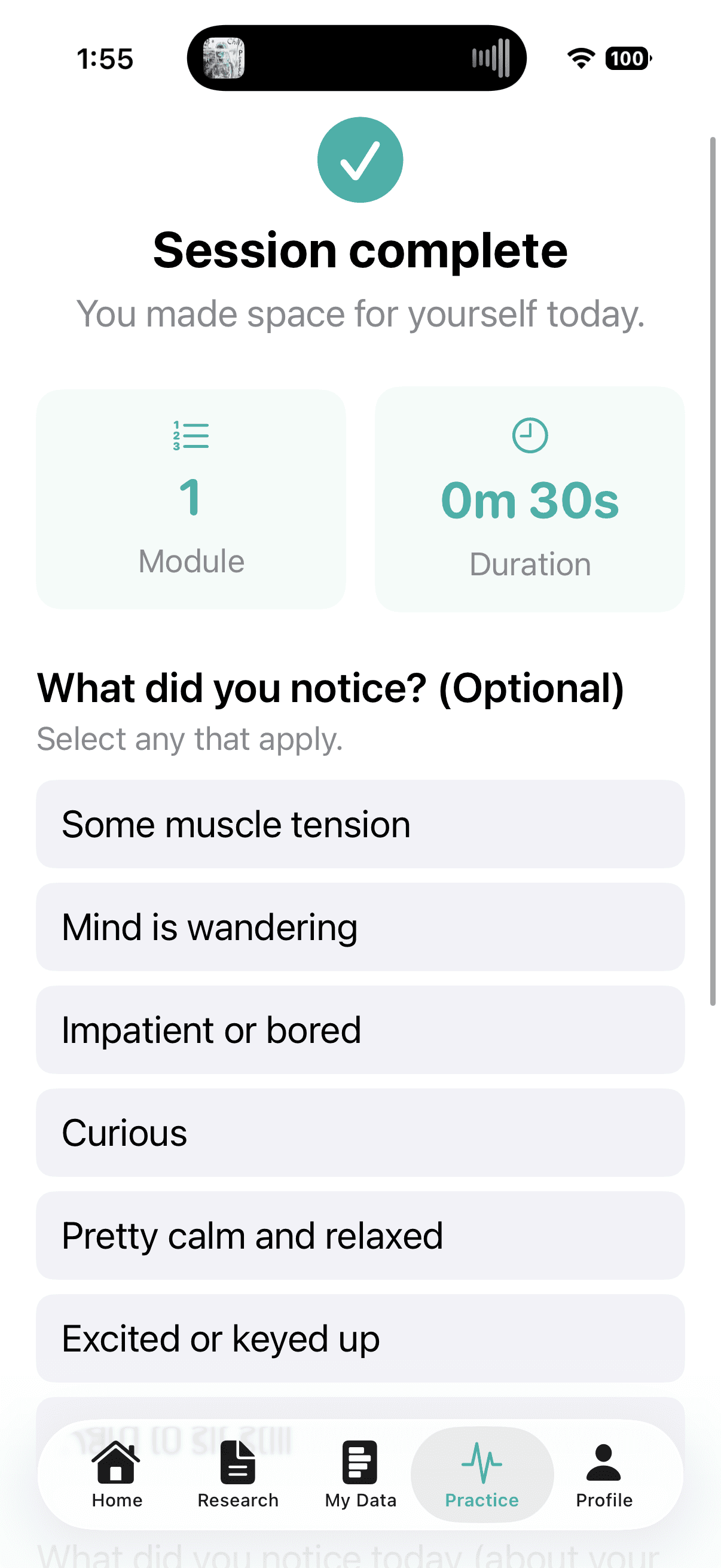
What did you notice?
Reflect on how it felt — muscle tension, a wandering mind, impatience, curiosity, calm, or anything else. All optional, all just information.